
Supporting founders alone
won't grow startups.
Designing the pitches, mentoring, and communities that create a regional growth spiral
How do you design pitch events, mentoring, and communities so a regional ecosystem starts to spiral upward? This article explains Kachinode's approach to regional startup support: translating leading ecosystem models to fit each region's industries, government, and universities.
Startup growth is never the work of founders alone. Mentors who meet a founder's challenge with sharp questions; local companies exploring collaboration; universities supporting the path into society; governments and banks investing in the future.
Only when these stakeholders interact around the founder's challenge — learning together and recirculating the next opportunity — does a regional startup ecosystem mature on its own. Through pitch events, accelerator programs, incubation facilities, and founder communities, Kachinode has designed growth spirals for whole regions, not just support for individual founders.
At the root of our thinking: not a hollow copy of Silicon Valley, but extracting the structural essence of leading ecosystems and translating it to each region's industries, universities, government culture, and founder community. That is where regional startup support begins.
What we support, and our track record.
Ecosystem & program design
- Regional startup-support strategy
- Mapping multi-stakeholder relationships
- Designing growth steps and mentoring programs
Pitch & event design and operation
- Pitch event planning & direction
- Speaker recruitment & selection
- Judging & feedback design
- Matching with companies and supporters
Community building
- Running founder, student, and supporter communities
- Sustaining long-term relationships
Visibility & research
- Outcome reports
- Structuring matching data
- Improvement proposals for the next cycle
Incubation facility operation: 9 years / accelerator program operation: 5 years. All figures are cumulative as of June 2026.
The resources exist — but that alone is not an ecosystem
Every region of Japan already holds rich potential to support startups: universities with technology and research seeds, companies leading local industry, governments seeking answers to social problems, and founders and students ready to start something new.
But there is a wide gap between resources merely existing, and those resources connecting organically to drive one another as a functioning ecosystem.
Support founders alone,
and without touchpoints to companies, customer development and collaboration never happen.
Great research seeds at the university,
but cut off from markets and operators, they never reach society.
Government funds new programs,
but unless the learning accumulates among local players, no soil forms for the next generation of challenges.
The essence of a mature ecosystem is not each player acting independently, but a cycle of challenge and learning that flows smoothly across sectors. Bringing that mechanism into a Japanese region requires structural translation to the local context — its industries, its university's position, its corporate culture.
Beyond one-off events, toward a lasting regional asset
Without structural design, regional startup support tends to run into failure modes like these:
Support that stays closed
Mentoring ends as private advice to individual founders, and never raises the knowledge of the companies, government, or region around them.
One-off programs
Pitch events and accelerators end with the excitement of the day, never connecting to the next pilot, collaboration, or funding round.
Resources split by sector
Universities, government, local companies, banks, and VCs each act separately, with no route that links resources to a founder’s growth stage.
Imported models, unadapted
Leading overseas programs, transplanted as-is, mismatch local business culture and founder maturity — and go through the motions.
The essential challenge goes beyond how to grow individual founders. It is how to design the whole circulation: with each founder's challenge as the starting point, what do the region's companies, universities, government, and investors learn — and what resources do they send back next?
Five approaches that help a region learn together and attract the next challenge
Kachinode designs and runs pitch events and accelerator programs not as isolated points, but as surfaces where the whole regional ecosystem keeps learning and starts to run on its own.
Frame each founder’s challenge as a learning opportunity for the whole region
A founder’s hypothesis concentrates the region’s industrial problems, market shifts, technology seeds, and real customer needs. We design programs that treat founders’ output as learning material for the whole region: founders open their hypotheses to sharpen them with quality feedback, companies read early market signals they could not see alone, and government raises the resolution of its next support theme.
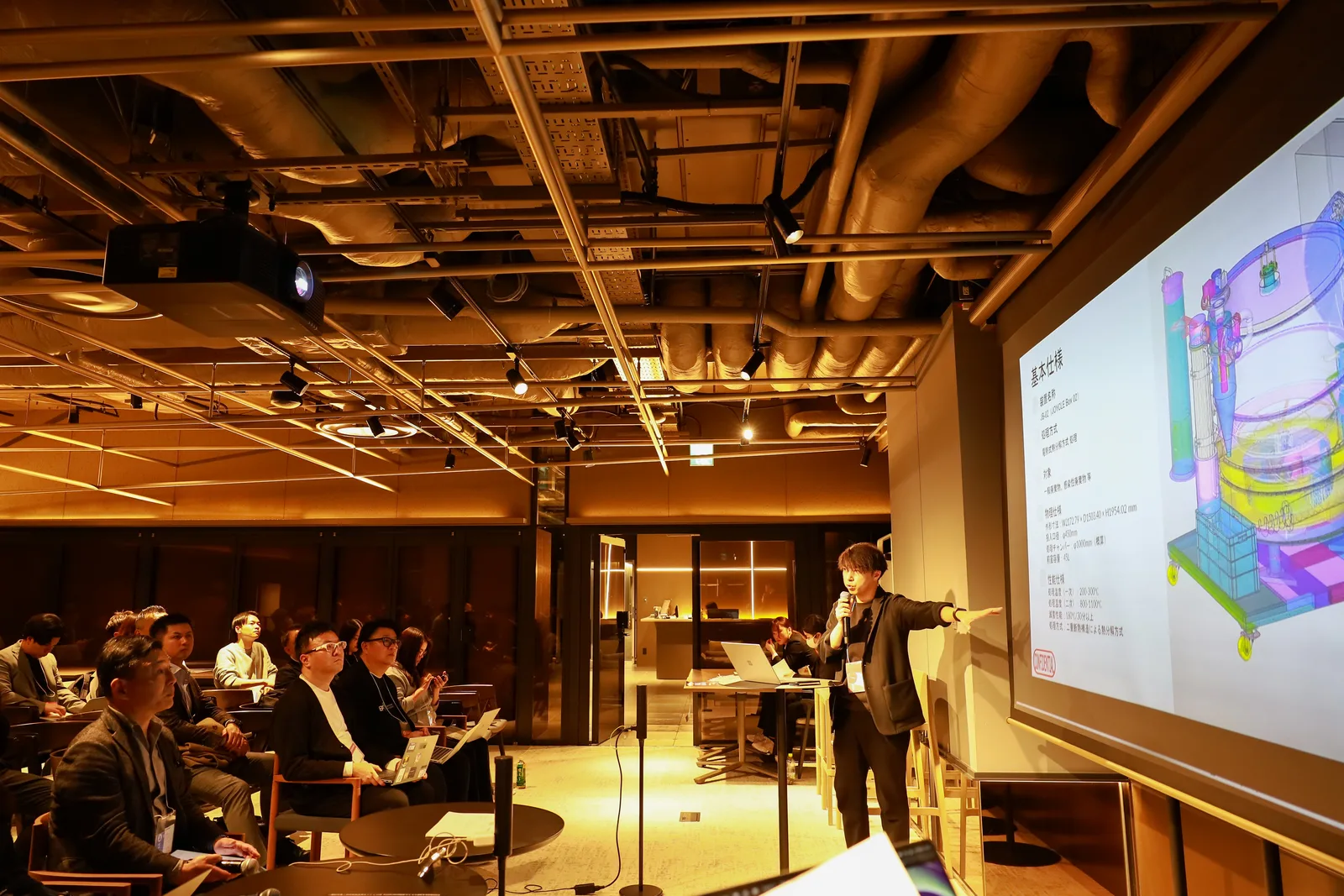
Design pitch events as the region’s learning apparatus
So a pitch never ends as a mere results presentation, we build recruitment, pitch coaching, judging criteria, and post-event matching as one system. The process by which founders sharpen customer problems and value is made public, so the region learns in real time what challenges are being born, here and now.
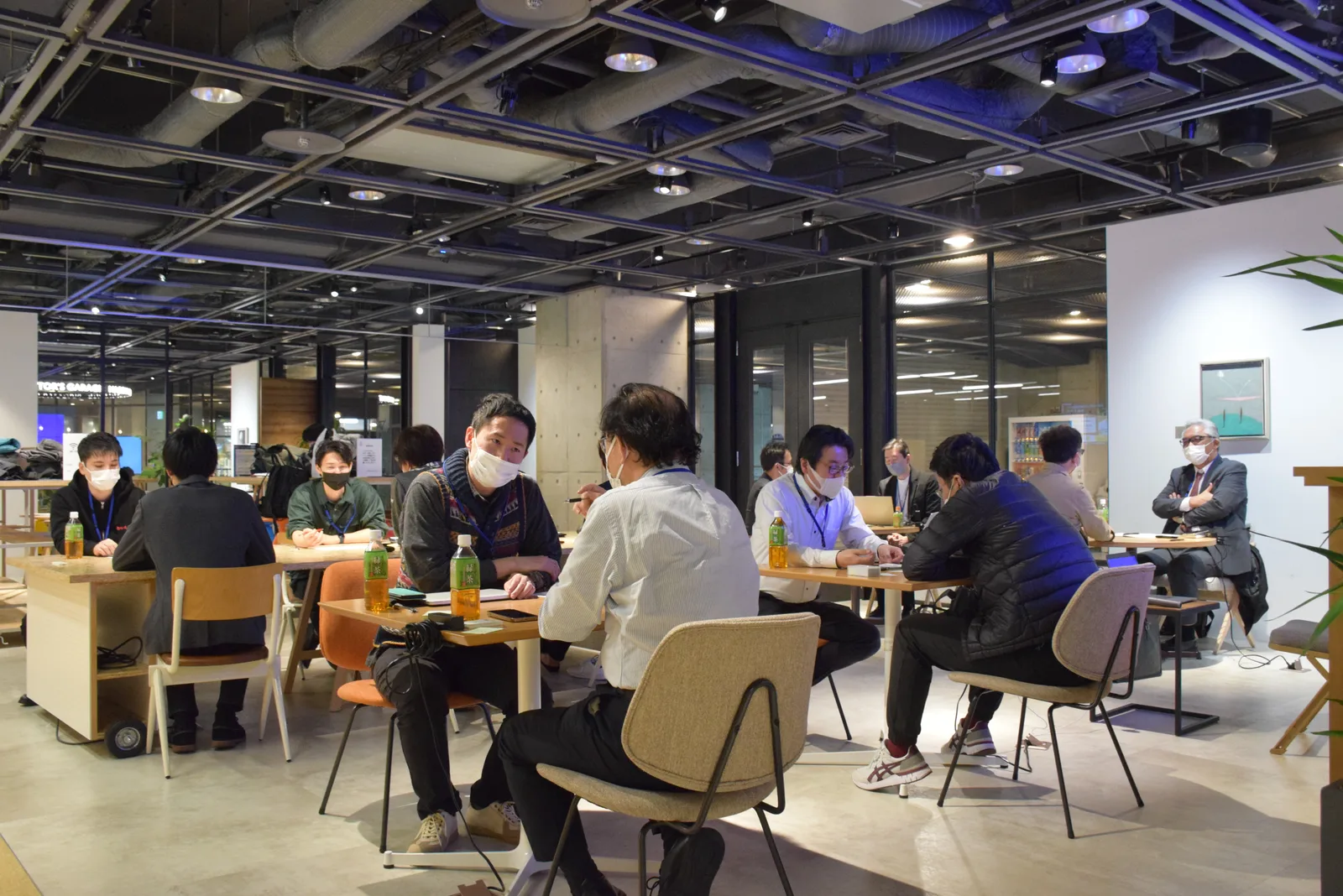
Turn mentoring into two-way hypothesis testing
Mentoring is not about experts handing down answers. For founders it is a proving ground for their market and customer hypotheses; for mentors and companies it is a place to bring home real problems and hints for putting technology to work in society. We define clear next actions after each session, so both sides leave with certain knowledge.
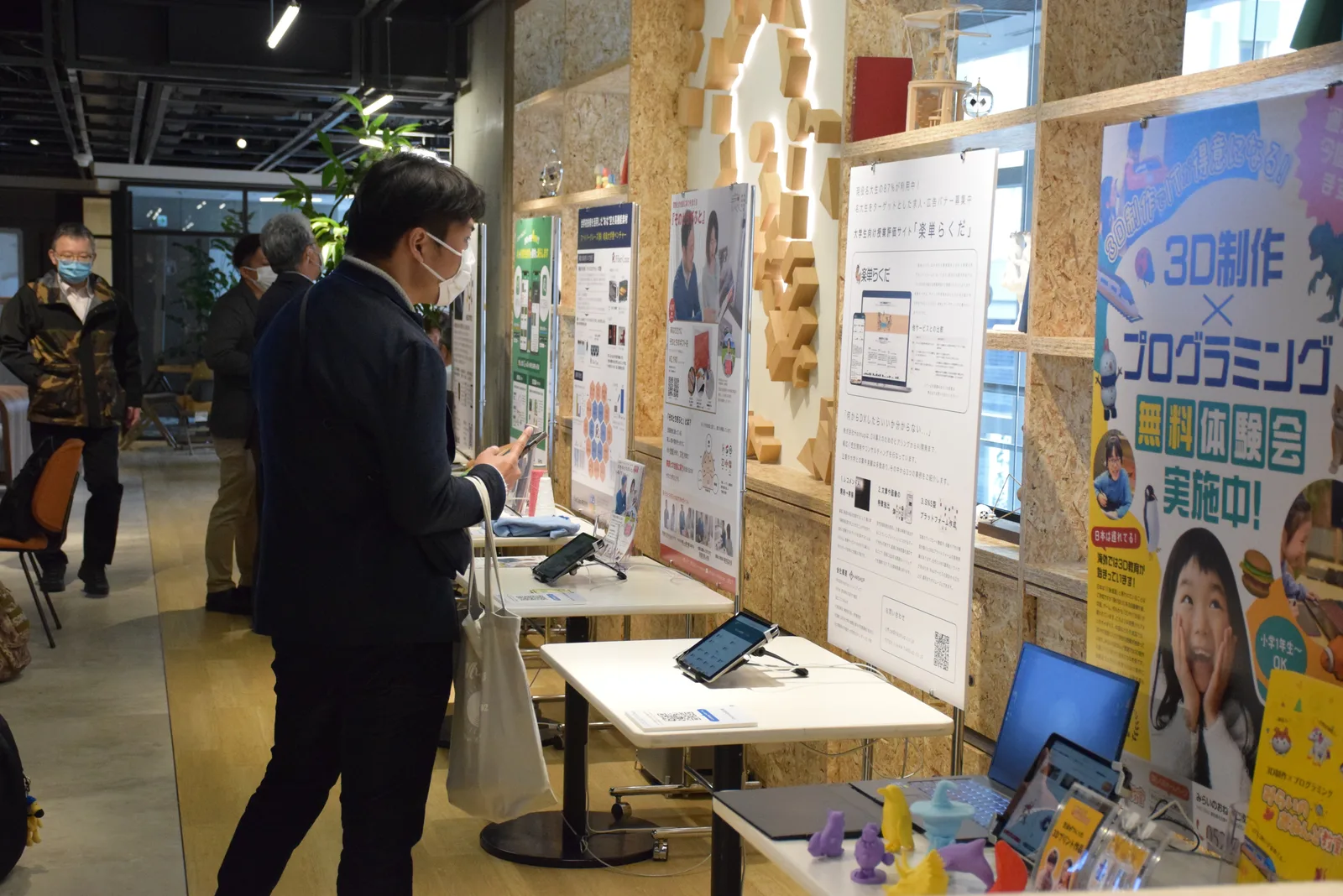
Translate leading ecosystems into the local context
Cultures of mutual support, practical feedback, and tolerance for failure — the world’s leading ecosystems hold real lessons. But moved wholesale to a regional Japanese city, they do not work. We weigh the local industrial structure, government systems, and the university’s position, and decide which elements to extract and how to localize them into the program.
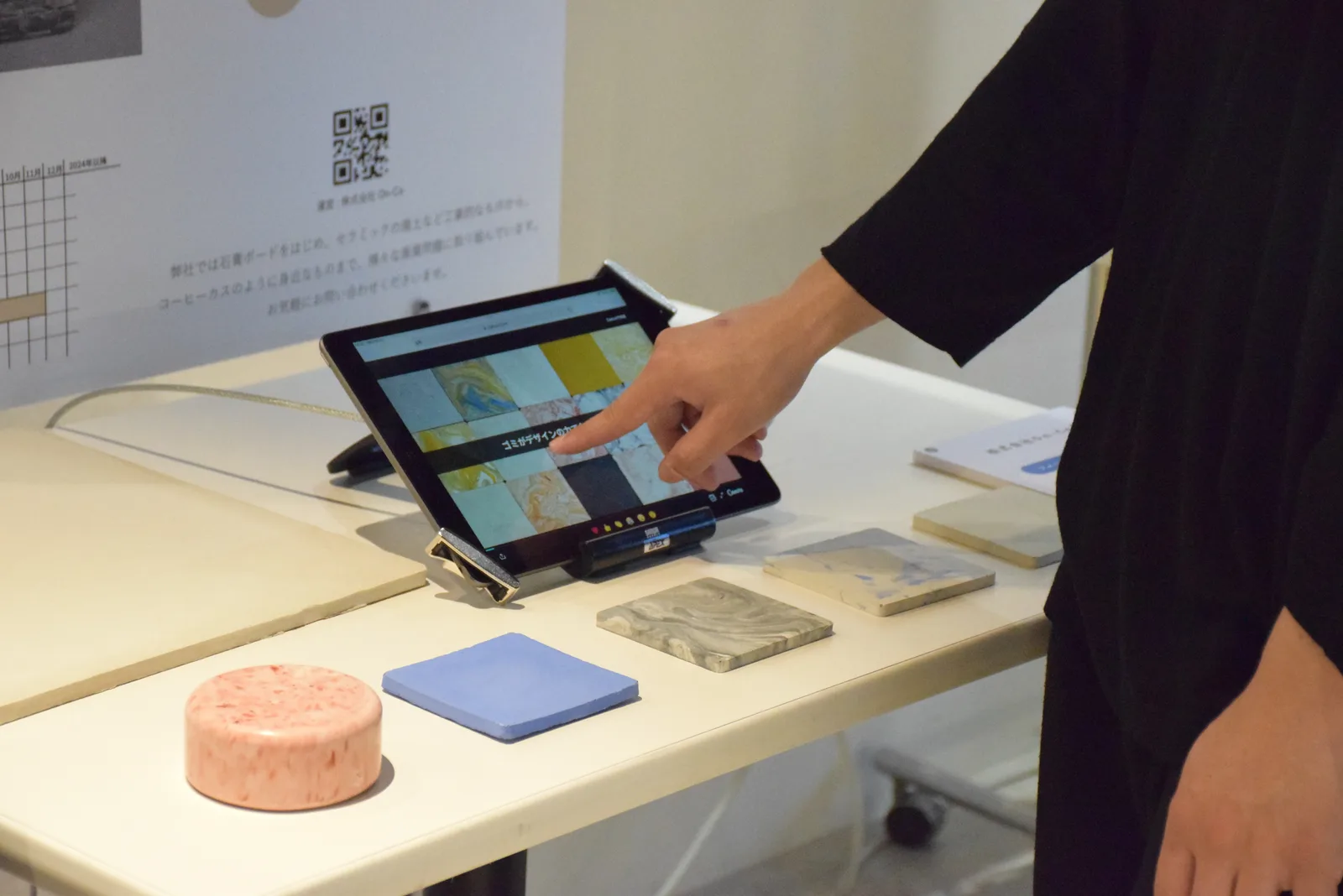
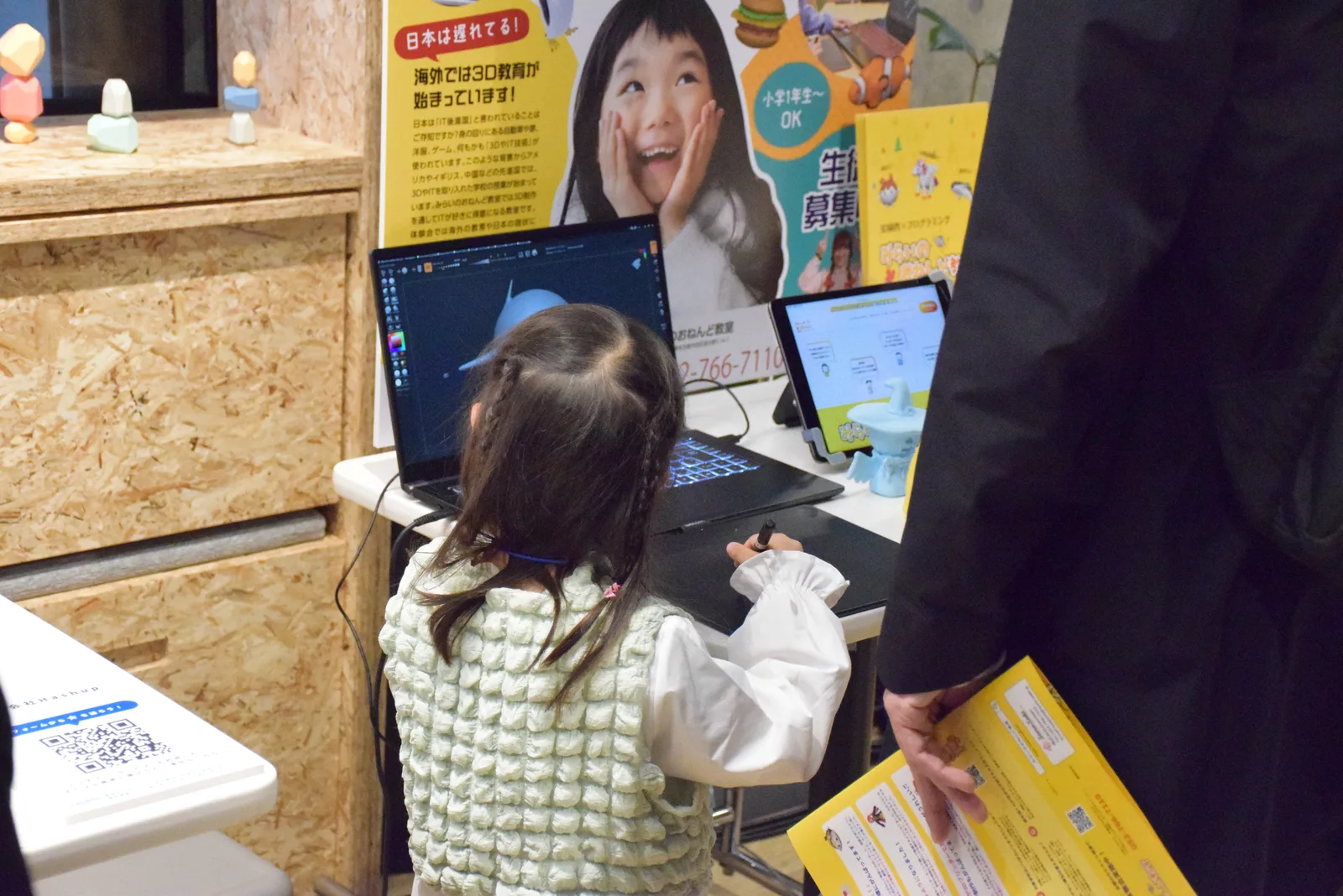
Make outcomes visible and stocked, to draw the next inflow of resources
Relationships and learning are invisible value. We make them visible to society as reports, data, and digital archives: which founders emerged, how they changed, what collaborations were born. Stocking that record as an asset builds the trust and expectations that draw next year’s participants, new partner companies, and new investment.
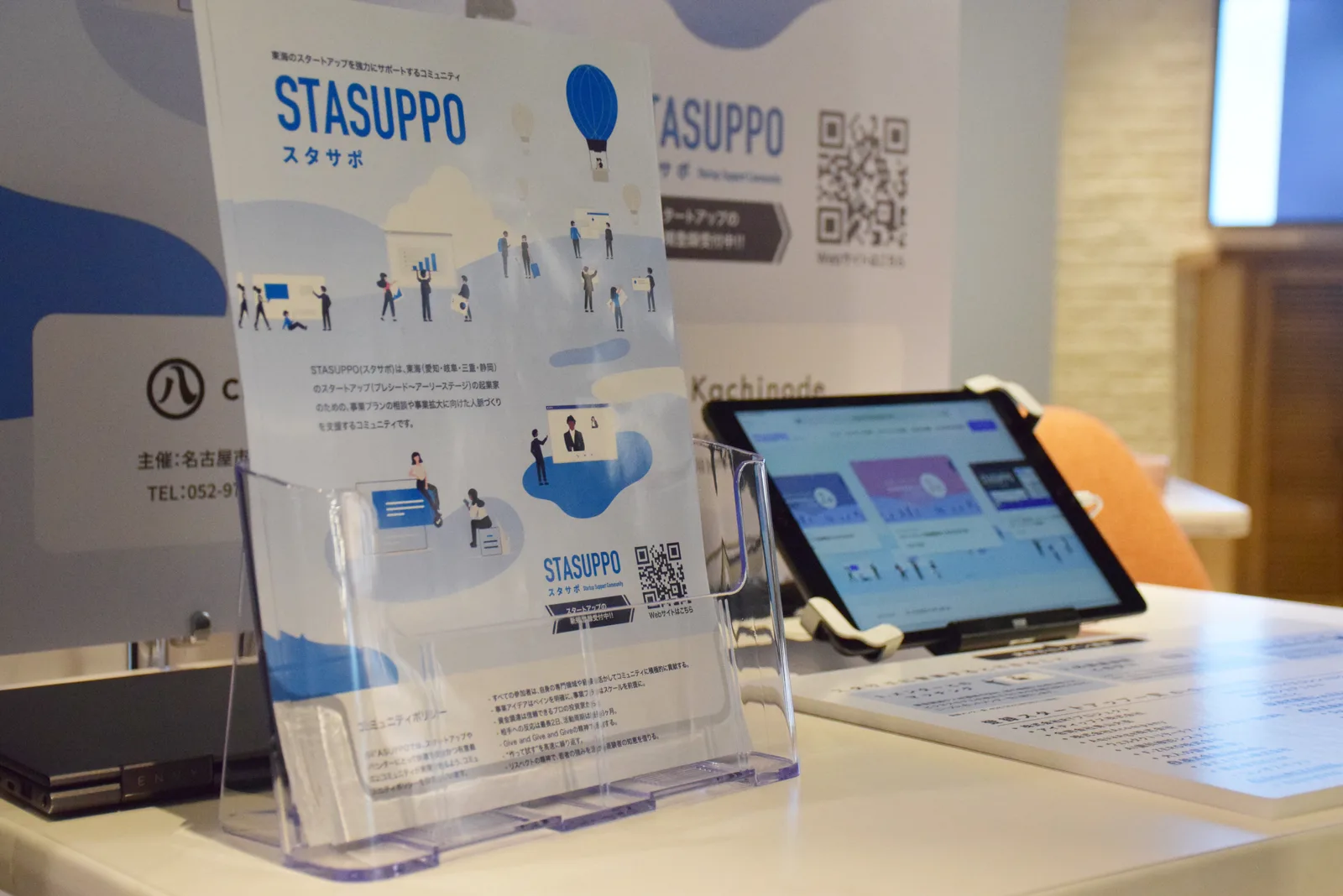
What we have designed and run
The creative work and mechanisms Kachinode has planned, designed, and implemented to drive regional ecosystems.
- Overall strategy for regional startup support
- Relationship & pathway design across sectors (founders, companies, universities, government)
- Visualizing the growth spiral linking regional resources and founders
- Acceleration / incubation program development
- Mentoring evaluation & operations design
- Running self-sustaining founder–student–supporter communities
- End-to-end pitch event production (planning, staging, facilitation)
- Judging & feedback criteria design
- Networking & business-matching systems
- Outcome & research reports
- Structured management of participant, speaker, and matching data
- Community portals / archive websites
Each player's role transforms — and the region starts to run on its own
The goal of our ecosystem design is not events that merely run on schedule. With every cycle of the program, we aim to bring structural change to each of the region's players:
Founders
Can articulate their hypotheses logically and run validation at full speed, drawing on the region’s resources.
Companies
Through dialogue with founders, catch market signals, social problems, and concrete collaboration options they could not see alone.
Universities & research institutes
Hold real touchpoints with founders and operating companies, accelerating the social implementation of research.
Government & support agencies
See the real challenges and bottlenecks on the ground, and concentrate budget on the support that is genuinely needed next — not on precedent.
Investors & banks
Meet promising, locally rooted challenges and seeds of growth at the earliest possible stage — beyond the surface numbers.
Pitches, mentoring, community. Connected to one another — with outcomes kept visible — the program sheds its skin: from a one-off event into a growth spiral the whole region keeps turning by itself.
Translation, not copying.
Design the environment where challenges circulate
The essence of startup support is not limited to growing founders as individuals. A founder's fresh challenge becomes the spark: companies glimpse the future, universities connect with society, governments discover problems, investors meet possibility. Designing this cycle of mutual learning between stakeholders is the core of building a regional ecosystem.
Respecting and learning from the world's best models is the premise. But copied wholesale into a Japanese region, they never take root — each region differs completely in its industrial history, university culture, government's role, and depth of founder community. What is needed is not a copy, but precise translation into the local context.
Not consuming challenges, but designing the circulating environment where one challenge calls forth the next. That is what we call Venture Design.